
The Truth About Residential Schools in Canada
Reconciliation can't start without facing the truth.

The unmarked graves found at Canadian Indigenous Residential Schools (IRS) in Canada started a media frenzy that I followed closely. It was claimed that Indigenous children were forced to attend these schools. Many died and never returned to their parents.
Canada committed genocide! Canadians started feeling guilty. Then the government gave indigenous groups huge sums of money to compensate for these past crimes. It all seemed like a horror movie.
But ….. and there is a huge BUT ….. the story is mostly fiction. The Canadian citizens did pay out large sums of money, but not because we committed genocide. There are no unmarked graves. Very few children were “sent” to residential schools; most wanted to go or at least their parents wanted them to go. Some children did die at the schools, but the number of deaths was fewer than if they had stayed home.
It is time Canadians and the rest of the world know the truth.
This post uses affiliate links
A Grave Error - A Must Read
Much of the information in this post comes from the book Grave Error. I will summarize some key points, but there is much more to learn in the book.
Purchase Grave Error from Amazon.com
Purchase Grave Error from Amazon.ca
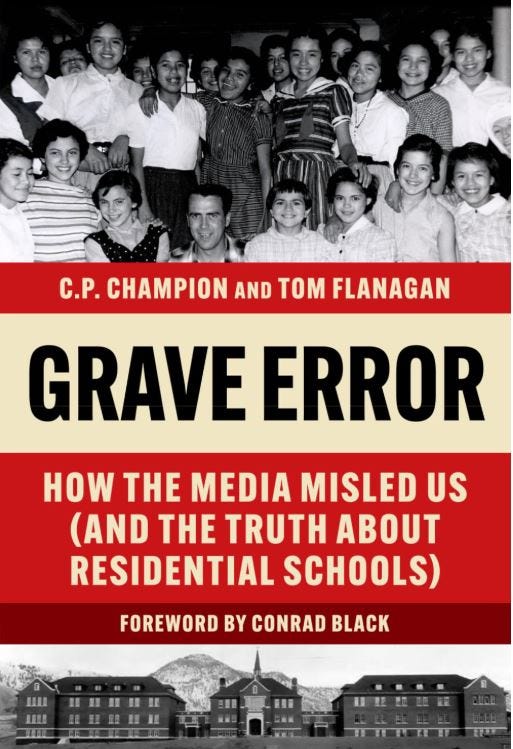
Unmarked Graves at Indigenous Schools
Several indigenous groups used ground-penetrating radar to search for unmarked graves. They did find anomalies and then went on to claim that the schools had murdered children and buried them without any record.
I have reviewed this in depth in Indigenous Grave Sites and GPR.
The reality is that NO unmarked graves have been found. There were no mass murders. There are no missing residential school children.
Unfortunately:
Indigenous groups keep pushing this false narrative.
Justin Trudeau, prime minister at the time, along with some of his ministers, misled the whole country and paid out large sums of money instead of checking the facts.
The Truth and Reconciliation Commission (TRC) concluded in 2015 that there was no reliable evidence of a single homicide committed against any students by any staff throughout the entire history of the Indigenous Residential Schools.

The Myth of Forced Attendance
In a speech to the United Nations in 2010, Murray Sinclair, who was then Chair of the Truth and Reconciliation Commission, declared: “For roughly seven generations, nearly every Indigenous child in Canada was sent to a residential school. They were taken from their families, tribes, and communities, and forced to live in those institutions of assimilation”. (Chapter 15 of Grave Error).
In an article by Indigenous Foundations, Erin Hanson claims, “In 1920, under the Indian Act, it became mandatory for every Indigenous child to attend a residential school and illegal for them to attend any other educational institution.”
Mainstream media parroted these ideas and reported that indigenous children were forced to attend the residential schools.
All of these claims are false!
Here is just one example showing how ridiculous these claims are. Several bands wanted IRS and even contributed to their building costs. In the 1940s and 1950s, the government started closing residential schools, and many tribes and parents requested that they stay open. The indigenous community at that time understood the value of the schools.
Were Children Forced to Attend Residential Schools?
This is a false narrative. Children from normal, stable homes who had responsible parents were never forced to attend residential schools. In fact, parents had to make special written requests to have their children attend such schools, and many parents did just that, believing their children would get a better education. For most students, it was a choice.
Children living in abusive homes, or orphans with no homes, might have been sent to the schools because they were used as a form of orphanage for children with no other place to go. Leaders of indigenous groups normally sanctioned such attendance and were certainly involved in the decision.
The term indigenous includes Metis, and they were discouraged from attending the IRS, further confirming that not all indigenous children attended these schools.
It is estimated that only 1/3 of the indigenous children attended IRS, not the nearly 100% Sinclair claimed.
The residential school program was initiated in 1883 in response to the desperate condition of Plains Indians. Game and buffalo had become sparse. The Canadian government helped out with rations and other financial assistance. The indigenous groups were not able to provide proper education, and so partnerships were arranged with churches to provide children with an education. These were set up with the complete approval and endorsement of the indigenous people.
Education for all children was not mandatory until 1916 in Saskatchewan and Alberta, and 1917 in Manitoba. The requirement for indigenous children on reserves was to attend the nearest available school, which could be on a reservation. There was never a requirement to attend a residential school.
Even after education for children became mandatory, many indigenous children did not attend a school.
The Myth of Cultural Genocide
The National Center for Truth and Reconciliation posted this on their website: “Residential schools were a systematic, government- sponsored attempt to destroy Aboriginal cultures and languages and to assimilate Aboriginal peoples so that they no longer existed as distinct peoples”. The TRC characterized this intent as cultural genocide.
This is a lie!
The schools were designed to provide an educated indian class who could become leaders in either Canadian or indigenous societies. Their goal was to provide an education system that was not available in indigenous communities. The church was interested in developing future educated priests, nuns, and ministers.
Many of the indigenous families were catholic and wanted their children to be educated in a catholic-based school system.
It is regularly claimed that the schools forced children to speak English in an effort to abolish native languages. English was the most common language used in Western Canada, as well as the language used by teachers in the schools. It should come as no surprise that English was the preferred language at the schools.
Indigenous children learned their traditional language and customs at home before they became old enough to attend school. They were also free to attend schools on reservations that taught their own language and culture. Once they graduated, they were free to return to their community and continue with their customs.
The average length of stay at an IRS was 4.5 years, and those with homes went home for the summer and even on weekends where possible.
How powerful were the schools? Children start learning things at home at age 4, and at school until possibly age 16 (oldest kids in the IRS). That is 12 years of learning. But only 30% of indigenous children did their learning at IRS, and for those that did, they only spent an average of 4.5 years at the IRS, which is more like 4 years once you take into account summer holidays and weekends.
That means, on average, indigenous students spent 10% of their educational years at a residential school. The other 90% of the time was spent in their traditional home being educated through traditional means. Is it realistic to blame the residential schools for eliminating language and culture when students only spent 10% of their time at these schools?
That is a ridiculous claim! Teachers were good - but not that good.
There was no attempt to squash their native language or culture. Efforts were made to educate the children in a Canadian way of life so that they would be better able to be part of the Canadian society.
If the IRS were committing cultural genocide, why were indigenous people completely unaware of the situation?
Various indigenous groups asked the Canadian government to build and run an IRS near their communities so that their children could get an education.
After 1980, many schools remained open but were run by Indian bands. Were they also committing cultural genocide?
When Cross Lake’s residential school burned down, the band asked for it to be rebuilt. Would they do that if they thought it was destroying their way of life?
Some schools did have uniforms, much like modern catholic schools. But other schools allowed students to dress in a variety of clothes. Some see this as a removal of indigenous customs, but in reality, it made it much easier to manage the schools. It was also a way to provide proper clothing to children who arrived at school without it.
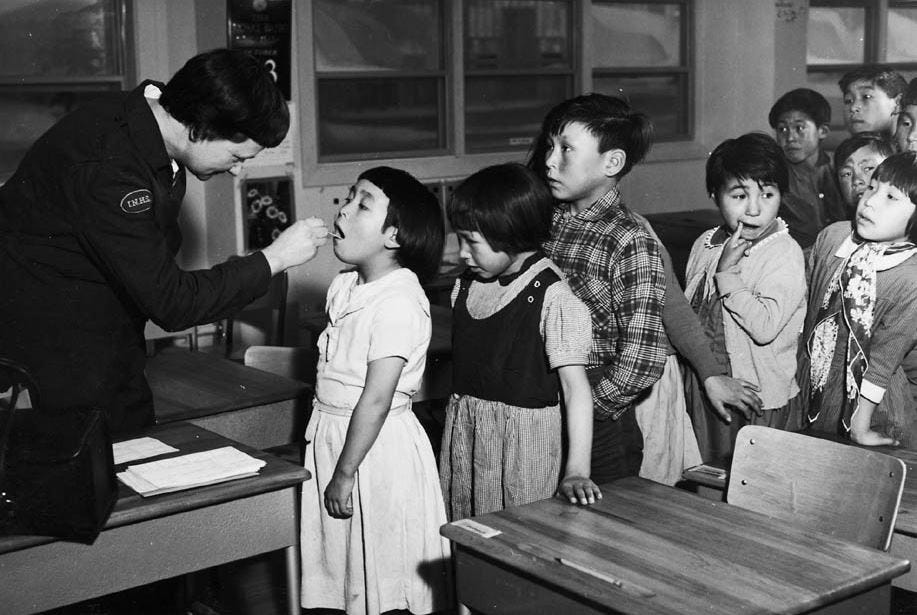

It is also important to realize that Nations quickly adopted the culture of Europeans. They used their clothing, weapons, and shelters. It is a natural progression for a society to adopt things that make life better. But now, some indigenous groups are calling this cultural genocide.
Residential schools did not ban indigenous traditions and did not forbid indigenous children from speaking their languages. On the contrary, the government of Canada published dictionaries of indigenous languages to help teachers and students.
By the time residential schools were started, almost none of the student homes were practicing their traditional culture. It had already become a mix of indigenous and European culture, and that continued to change up to the current day. It could, therefore, be argued that indigenous peoples caused their own cultural genocide.
The reality is that English, and to a lesser extent French, was a major requirement to function in the rest of Canada. Schools would have been remiss not to teach it. Learning English was also a key reason why parents sent their children to residential schools.
The TRC makes claims of cultural genocide and even defines it as “the destruction of those structures and practices that allow a group to continue as a group”. However, in its 3,500 pages, it does not provide a single piece of evidence to support the claim.
The Lost Children
In 1990, in an interview with Barbara Frum of CBC, Phil Fontaine, then Manitoba Region Chief of the Assembly of First Nations, made allegations of sexual abuse at IRS by other children.
This was followed by numerous stories of murders and clandestine burials. It was claimed that many indigenous children at IRS were never returned to their homes, never to be seen again.
There is no record of a single student being murdered by teachers or administrators of the schools.
There are no records of indigenous parents claiming that their children were missing.
The TRC interviewed hundreds of parents and did not document a single case of missing children.
It is interesting and very telling that this type of claim was not made before the 1990 interview. And yet, suddenly, all kinds of people remembered that these events took place.
It is important to note that not all indigenous people make such claims. The book, Grave Error, documents numerous indigenous leaders and authors who categorize the claims as false.
I find it hard to believe that hundreds of students went missing, and none of the parents did anything about it. I understand why some would not report the problem to Canadian authorities, but surely they would report the problem to band chiefs. And they, in turn, would have made some report of the instance? At the very least, this would include a letter to a newspaper or a government office. But no such evidence exists.
All we have are stories with no evidence of missing children.
The Truth and Reconciliation Commission Fails
I distinctly remember the announcement that the Truth and Reconciliation Commission was being formed and tasked with finding the truth about how indigenous peoples were treated. It sounded like a great idea.
The staff of the commission would gather evidence and determine the truth - or at least that is what the title of the commission suggests.
On the day of the announcement, indigenous leaders and members of the commission made it clear that the process was in trouble. They clearly stated their goal. It was to travel across Canada and give everyone a chance to “tell their story”. There was no mention of actually gathering evidence or determining the facts. What was much more important was to hear “stories”.
What should the commission have done? Examine police and band reports of problems. Examine reports in government files. Interview everyone involved in those reports to determine the real facts surrounding any claims. How else can you determine the truth?
None of that mattered. It was more important to listen to stories with no evidence supporting the claims.
The validity of the claims in the TRC Report and the methodology used to gather information have been extensively reviewed by authors Rodney Clifton (worked at a residential hostel in Inuvik) and Mark DeWolf (IRS student), who wrote From Truth Comes Reconciliation. Everyone should read this book, but I will summarize some of its key findings below.
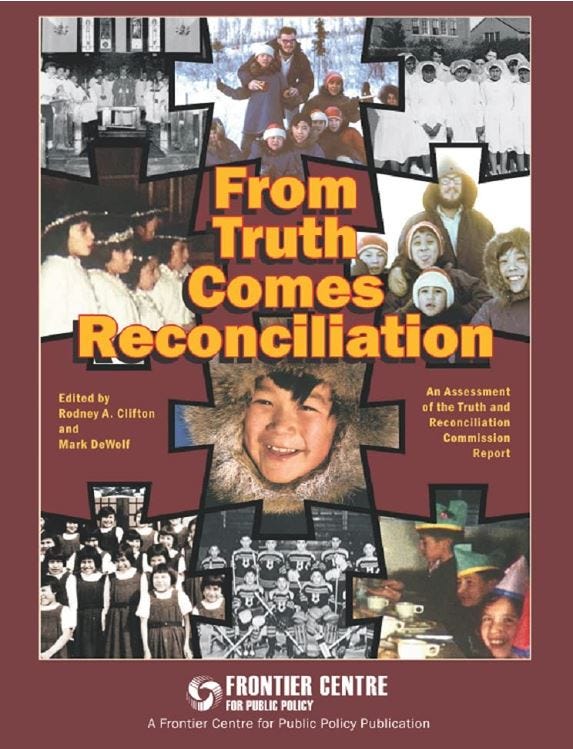
The TRC made numerous errors in reporting on the facts surrounding the IRS, some of which have been documented above.
The report did a good job recording people's negative memories of residential schools, but it failed to verify any of the claims. There were no cross-examinations, and witnesses could report their story in private. The reports are very one-sided and do not reflect the real history. Brian Giesbrecht, a former Manitoba courts judge, concluded that the accounts “showed a lack of concern with the truthfulness of the evidence”.
The conclusion of the report, the section most people read, is extremely negative and does not reflect the evidence that was collected and documented in the main body of the report. Positive reports about the IRS were universally ignored.
The TRC makes claims of physical genocide, defined as the mass killing of members of a targeted group. But the report provides no evidence to support this claim.
The TRC makes claims of cultural genocide, but as demonstrated above, there is no evidence for it. In fact, some of the testimony in the report clearly contradicts such a claim.
At the beginning of the process, the commission clearly said it wanted to hear from school staff and other non-native students. The oral records collected were overwhelmingly from indigenous people who identified as " survivors”. A professional historian on the TRC staff said that the commission’s actions “were not consistent with its claims to include non-Aboriginal voices. The budget for interviewing school staff was cut from $100,000 to just $10,000. Compare that to the total expenditure of $60 million, and you get a good idea of how unbalanced the interviews were.
IRS started to close in the 1950s, and few remained by the 1980s. Only 30% of indigenous students attended such schools, and yet in 2015, the TRC alleges that everything negative in the lives of Aboriginals since 1883 and continuing in 2025 is caused by the IRS. The report makes no effort to try to separate issues stemming from the schools vs living conditions on reserves. It never compares issues between students and families who attended IRS and those who did not attend them.
It is clear that indigenous groups have serious problems, including poverty, marginalization, alcohol and drug abuse, and family breakdown. It is ridiculous for the TRC to claim that all of these problems are a result of residential schools.
The Truth and Reconciliation Commission spent $60,000,000 of public money to produce a document that can’t be trusted. Neither the stories nor the conclusions should be treated as “TRUTH”.
What I find most disturbing, and you should too, is that we wasted 60 million dollars. At the time the commission was announced, indigenous people were jumping for joy to have the opportunity. But was this really the best use of the money? Would indigenous people not be better off if we spent it on actually providing some services to them?
It is time to let the past go. Canada and the indigenous people need to move on and develop a better future. Rehashing the past does not really help anyone.
The Lasting Damage of the Truth and Reconciliation Report
I asked my granddaughter (white, descendant from immigrant families) what she knows about residential schools, and she has been taught about them in school. She learned that the IRS forced indigenous children to attend the schools and then stole their culture.
Just before this conversation, I was listened to a CBC program on the radio where they were interviewing indigenous students who were learning hoop dancing. The dancers commented that one reason they loved this form of dance is that it allowed them to connect with their culture, which was stolen from them and their parents in day schools. The interviewer acknowledged the fact that residential schools had done harm.
Both of these comments about the loss of culture are false. It is sad that both groups are being taught these lies about our past. The Truth and Reconciliation Report has done some serious damage to many people in Canada.
3,200 Indigenous children, at least, died at residential schools, according to the 2015 report of the Truth and Reconciliation Commission. Residential school students died at a rate far higher than children in the rest of Canada